Why Is My Hair Not Growing? Causes, Solutions and Best Hair Oil for Hair Growth
Have you been looking in the mirror and wondering, “Why is my hair not growing?” Many people experience this problem at some point in their lives. You may feel that your hair has stopped growing completely, even though you are taking good care of it. The truth is that hair usually continues to grow, but certain factors can slow down the growth process or cause hair to break before it reaches a longer length.
Hair growth is a natural process that happens in cycles. Every hair strand goes through a growth phase, a resting phase, and a shedding phase. When this cycle is affected by poor hair care, stress, scalp problems, or nutritional deficiencies, hair may appear thin, weak, or unable to grow longer.
In this guide, we will explain the most common reasons why your hair is not growing and share simple tips that can help you maintain healthy-looking hair.
Understanding the Hair Growth Cycle
Before discussing the causes, it is important to understand how hair grows.
Hair grows from tiny structures in the scalp called hair follicles. Most hair strands remain in the growth phase for several years before entering a resting phase and eventually falling out. It is normal to lose some hair every day because new hair continues to grow in its place.
However, when hair becomes weak, damaged, or unhealthy, the growth cycle can be disrupted. This can make it seem like your hair has stopped growing.
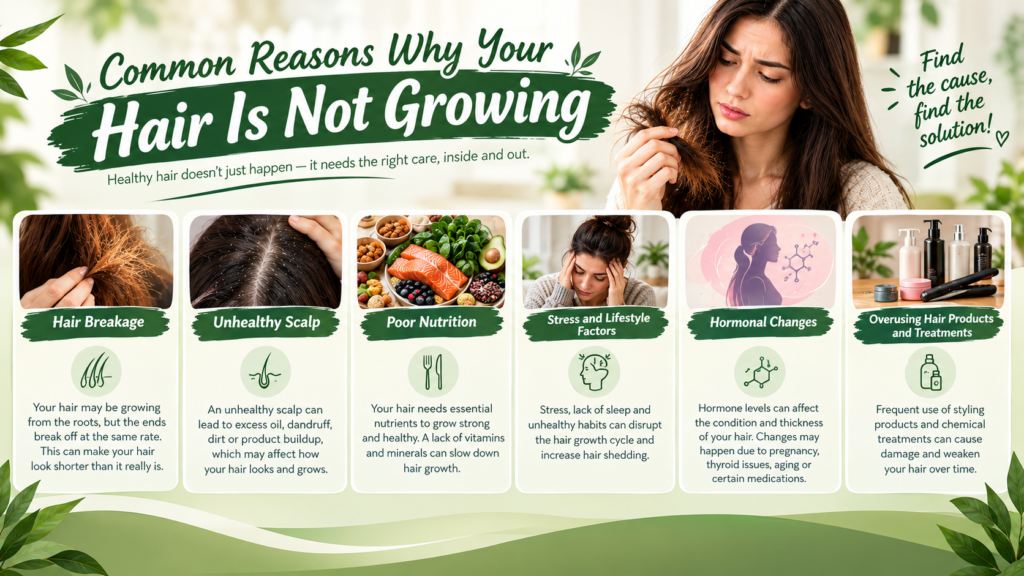
Common Reasons Why Your Hair Is Not Growing
1. Hair Breakage
Hair breakage is one of the biggest reasons people think their hair is not growing. Your hair may actually be growing from the roots, but the ends break off at the same rate.
Common causes of hair breakage include:
Excessive heat styling
Frequent hair coloring
Tight hairstyles
Rough brushing
Dry and damaged hair
When breakage becomes severe, it becomes difficult to notice any increase in hair length.
2. Unhealthy Scalp
A healthy scalp creates a better environment for healthy hair. If your scalp is covered with excess oil, dandruff, dirt, or product buildup, your hair may not look its best.
Signs of an unhealthy scalp include:
Itching
Flaking
Redness
Excessive oiliness
Dry patches
Keeping your scalp clean and nourished is an important step in maintaining healthy-looking hair.
3. Poor Nutrition
Your hair needs nutrients to grow strong and healthy. If your body does not receive enough vitamins and minerals, hair growth may slow down.
Important nutrients for hair include:
Protein
Iron
Zinc
Vitamin D
Vitamin B Complex
Omega-3 Fatty Acids
A balanced diet containing fruits, vegetables, lean proteins, and healthy fats can support overall hair health.
4. Stress and Lifestyle Factors
Stress can affect many parts of the body, including the hair growth cycle. Physical stress, emotional stress, lack of sleep, and unhealthy lifestyle habits may contribute to increased hair shedding.
Simple ways to manage stress include:
Regular exercise
Quality sleep
Relaxation techniques
Healthy eating habits
5. Hormonal Changes
Hormones play an important role in hair growth. Changes in hormone levels may affect the condition and thickness of your hair.
Hormonal changes can occur because of:
Pregnancy
Thyroid disorders
Aging
Medical conditions
Certain medications
6. Overusing Hair Products and Treatments
Many people use multiple styling products without realizing they can contribute to hair damage.
Frequent use of:
Hair sprays
Hair gels
Chemical straightening treatments
Bleaching products
Strong shampoos
may leave hair dry and fragile over time.
Signs That Your Hair Is Growing
Many people become worried too quickly because they do not see immediate results. Hair growth is usually a slow process.
Here are some signs that your hair may actually be growing:
New baby hairs around the hairline
Increased hair thickness
Less hair fall during washing
Stronger hair texture
Healthier-looking scalp
Patience is important because visible changes often take several weeks or months.
Follow a Healthy Diet
Good nutrition supports overall hair health. Focus on eating foods rich in protein, vitamins, and minerals.
Stay Hydrated
Drinking enough water helps maintain healthy skin and scalp conditions.
Avoid Excessive Heat
Limit the use of straighteners, curling irons, and blow dryers whenever possible.
Trim Split Ends
Regular trims can help prevent split ends from traveling further up the hair shaft and causing additional breakage.
Why Choose Aromatig Hair Oil?
A healthy hair care routine often includes regular oil massage. Aromatig Hair Oil is designed to support scalp care and help maintain healthy-looking hair.
Regular use of Aromatig Hair Oil may help:
Nourish the scalp
Improve hair softness
Reduce dryness
Support stronger-looking hair
Promote a healthy hair care routine
Improve the appearance of dull and damaged hair
Many people include hair oiling in their weekly routine because it helps keep the scalp moisturized and hair manageable.
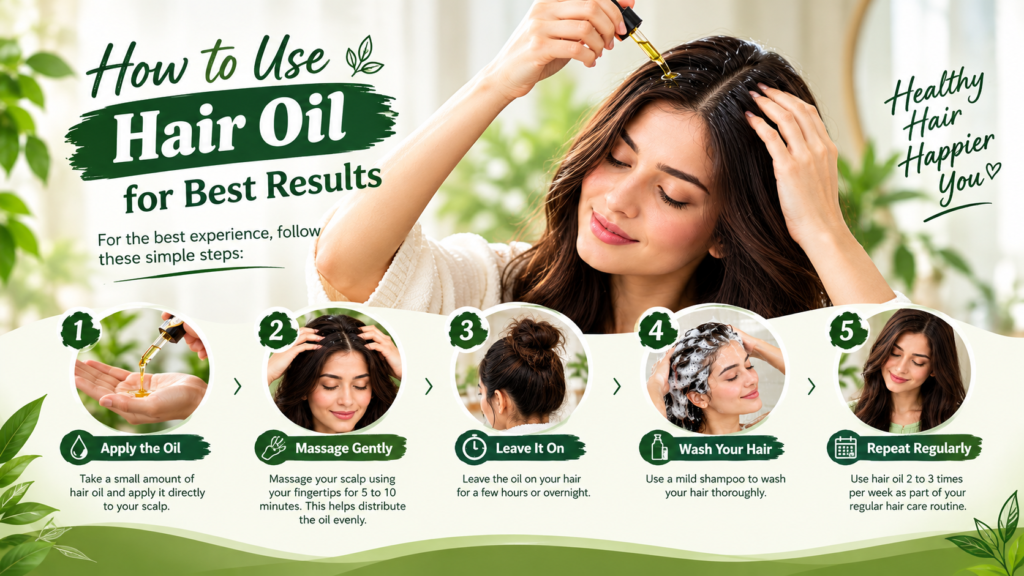
How to Use Aromatig Hair Oil for Best Results
For the best experience, follow these simple steps:
Step 1: Apply the Oil
Take a small amount of Aromatig Hair Oil and apply it directly to your scalp.
Step 2: Massage Gently
Massage your scalp using your fingertips for 5 to 10 minutes. This helps distribute the oil evenly.
Step 3: Leave It On
Leave the oil on your hair for a few hours or overnight.
Step 4: Wash Your Hair
Use a mild shampoo to wash your hair thoroughly.
Step 5: Repeat Regularly
Use Aromatig Hair Oil 2 to 3 times per week as part of your regular hair care routine.
Conclusion
If you keep asking yourself, “Why is my hair not growing?”, remember that hair growth can be affected by many factors, including breakage, stress, poor nutrition, scalp issues, and lifestyle habits. The good news is that small improvements in your daily routine can make a noticeable difference over time.
By maintaining a healthy lifestyle, taking care of your scalp, and using Aromatig Hair Oil regularly, you can support healthy-looking hair and improve the overall condition of your scalp and hair.
Frequently Asked Questions (FAQs)
Why is my hair growing so slowly?
Hair growth may seem slow because of breakage, poor nutrition, stress, scalp conditions, or hormonal changes.
How long does it take to see hair growth?
Hair typically grows around half an inch per month, although growth rates can vary from person to person.
Can damaged hair stop growing?
Damaged hair does not stop growing from the scalp, but it can break easily, making growth less noticeable.
Does scalp massage help hair growth?
Scalp massage may help improve blood circulation and can be a useful part of a healthy hair care routine.
Is Aromatig Hair Oil good for regular use?
Yes. Aromatig Hair Oil can be used regularly as part of a weekly hair care routine to nourish the scalp and support healthy-looking hair.
How many times should I use Aromatig Hair Oil?
For best results, use Aromatig Hair Oil 2 to 3 times per week and massage it gently into the scalp.
What foods are good for healthy hair?
Protein-rich foods, fruits, vegetables, nuts, eggs, fish, and foods rich in iron and vitamins can support overall hair health.
Can stress cause hair fall?
Yes. High levels of stress may affect the hair growth cycle and contribute to increased hair shedding in some individuals.